Disclaimer: all statements in this post are observational they should not be taken as fact. They should not be read as to malign the Norton Sound region, its people, or its health care providers. The title of this post is an exact quote from an undisclosed person working in healthcare in rural Alaska. After our week in St. Michaels and Stebbins I can’t argue with that view.
While “third world” is a passé term – and ethnocentric (there is only one world) – the idea that rural Alaska is not on par from an economic, social welfare, or healthcare standpoint, compared to the majority of the US, is true.
What we see in Rural Alaska is replicated in community after community, country after country around the world. Our time in St. Michaels and Stebbins served as a reminder that we live in a broken world.
We haven’t been tracking our blog visitors as much as before so we’re not sure who is reading what we’re writing – or, if you will, feeling what we’re throwing down.
For those that don’t know I consider myself a Christian. Simply one who believes that “religion that God our Father accepts as pure and faultless is this, to look after the orphans and widows in their distress and to keep oneself from being polluted by the world.” Avoiding this pollution by the world – sin – is impossible so we need the sacrifice of Christ – for the forgiveness of our sins – to have a relationship with God.
The preceding paragraphs will tie into our experiences in St. Michaels and Stebbins by the end of this post if you make it that far.
We left Nome for St. Michaels on Monday morning.
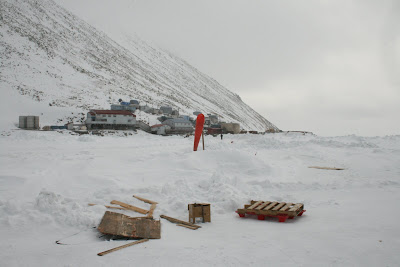
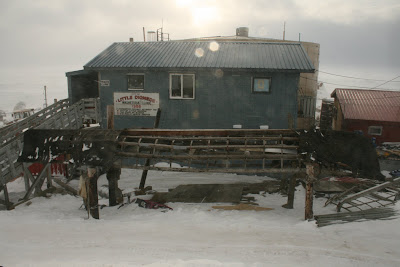
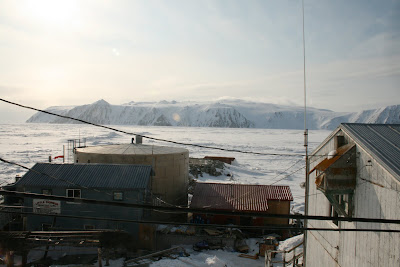
St. Michaels and Stebbins are two communities that are actually quite close together (separated by more than 10 miles but less than 15 depending on the “road” traveled). St. Michaels is the smaller of the two and we arrived in time to set up and start seeing patients by just after noon.
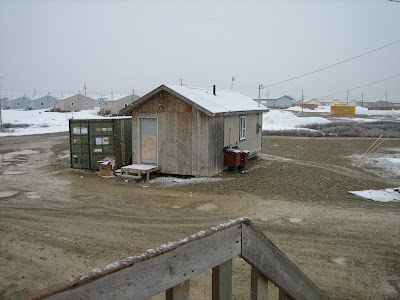
St. Michaels has plumbing.
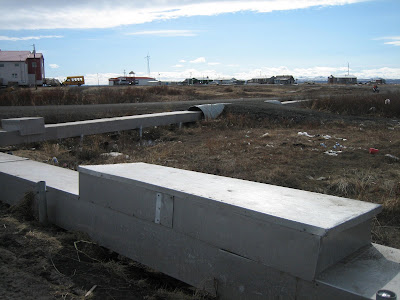
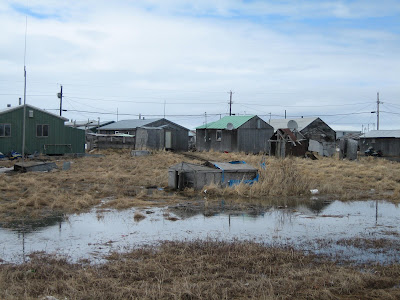
Stebbins does not; however, both clinics where we were working were equipped with running water. We were not able to have a shower in St. Michaels because of a broken shower. We had the opportunity to request to go to people’s homes to have showers but decided to go stinky.
We.
Decided.
To.
Go.
Stinky.
How many people in the world don’t have the choice of whether or not they go stinky? Over 1 Billion people in the world don’t have access to clean drinking water let alone extra water for hygiene.
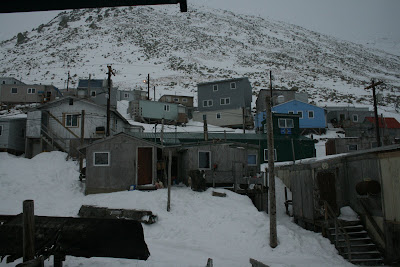
The people in Stebbins don’t count toward that number because they do have access to clean water it’s just not pumped into their homes.
Swell’s Grandparents are not included in that number because they have a well nearby their home the water is just not pumped into their home.
Can you believe that there are entire communities in the US who do not have plumbing? There are and only some of them live in rural Alaska.
Can you believe that there are a billion people in the world who don’t have clean water nearby? No drinking water. No cleaning water.
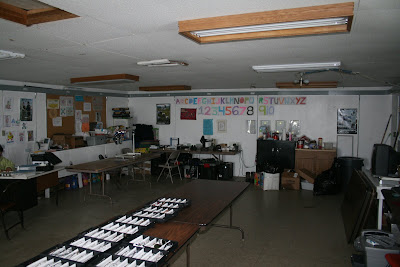
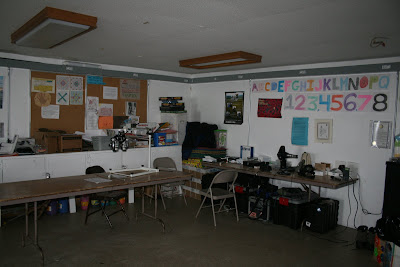
We worked pretty hard in the old clinic in St. Michaels.
It was hard work as usual but it was fun work for the most part. The people were very nice.
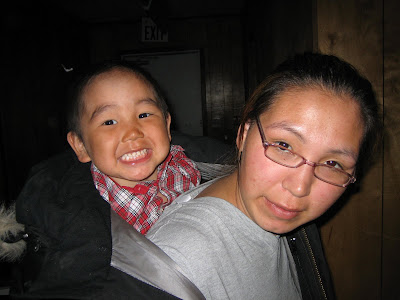
Although many were sick. Some type of virus was sweeping through the town and when native people are sick apparently it becomes "ok" to snort and sniffle and spit into garbage cans no matter who is sitting two feet from you.
By the end of the week we would all be sick.
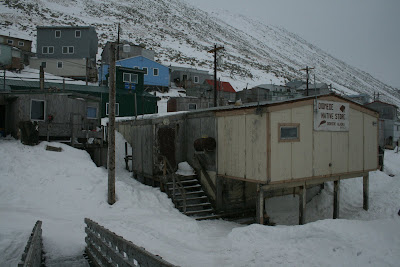
They have a big store in St. Michaels so we would walk way over there every day for some treats.
Some very, very expensive treats.
It amazes me that people don’t starve to death in these rural villages. Food is expensive.
Beyond expensive.
Many, like in much of the inner city throughout the US, are forced to live off of prepared foods.
Canned “pasta”, frozen pizza, TV “dinners”, and ground beef. You get the drift.
Fresh fruits and vegetables and lean meats are just too expensive.
So like in much of the inner city throughout the US obesity is becoming a problem. With obesity comes diabetes, high blood pressure, heart disease, etc.
Alcohol is also a problem. We saw many children with fetal alcohol syndrome (many is an undefined term but it was more than one and less than all).
We also made the dramatically unscientific note that many girls seem to get pregnant at a relatively young age. 17, 18, 19. I’m not sure if that is a “problem” or a cultural fact. It does seem (again observationally) that many children are raised by single women and many of the single women are the children’s grandmas.
While on these trips one can’t help but think. The overwhelming back pain and fatigue that comes from doing 50 eye exams over a 14 hour day begets thinking.
Swell and I have no desire to live in rural
Alaska for any length of time. We doubt that the clinic here will need us anymore come July, as they have hired a full-time/permanent person to begin then.
I doubt we’ll end up in Africa, or rural Asia.
I fully suspect that we’ll soon become dreaded suburbanites. Something that I’ve never, ever desired.
Something that I’ve long despised.
What will our role in the world be if we’re living in Seattle, or Edmonton, or Portland, or Auckland?
A good bit ago I read The Irresistible Revolution by Shane Claiborne. He seems to agree with a lot of my thoughts but rather than just think them he has put them into practice by living in community in the inner city and having nothing that isn’t shared. (All money from the sale of his book was given away.)
While reading his book I noted a few paragraphs.
Going back through the book some of them address the questions Swell and I have re: our future.
We worked hard in St. Michaels and when we were done working hard we hopped in an Ambulance for the short drive to Stebbins.
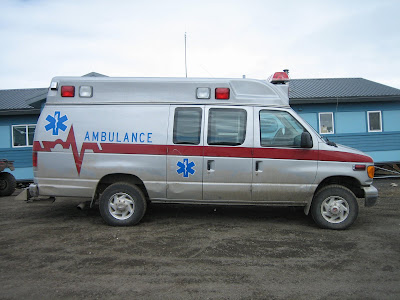
It’s funny that they have an ambulance. They don’t have a hospital. They have a well equipped health clinic staffed by a physician’s assistant and some health aides. I’m guessing that the ambulance was to transport people from their homes to the clinic or to the airstrip to be med-evaced to Nome or Anchorage.
Many of the things that are done in rural Alaska are straight from the pages of a global health public health text book. Some of them are in the good ideas pages:
Health aides (well respected local people trained to care for the community and refer up the chain if necessary)
A central tertiary center to which people can come if needed.
And many of them are from the “do not do” pages.
An ambulance is one of those things that should not have been done.
In a global context transportation to a tertiary care center (or for that fact a primary care center in a lot of places) is a challenge and a burden for folks. A solution attempted by some was the purchase of vehicles to either transport a medical worker to a patient or transport the patient to a medical worker.
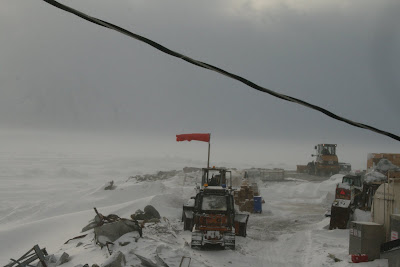
Problem – roads are often impassable. St. Micheals to Stebbins – road is impassable at times during the winter.
Problem – maintenance of the vehicle is often an issue. Ambulance in St. Micheals/Stebbins runs but no one knows how to maintain all the sophisticated ambulance parts.
This is but one example of why I’ve found it interesting to work in Rural Alaska. Rural Alaska is as it was bluntly put “the third world’ with the same problems and the same attempts at solutions as many countries have attempted/are attempting.
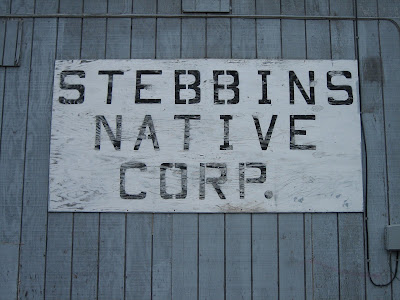
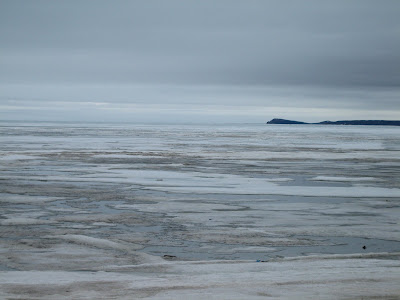
We worked harder in Stebbins than we did at St. Michaels – more people means harder work.
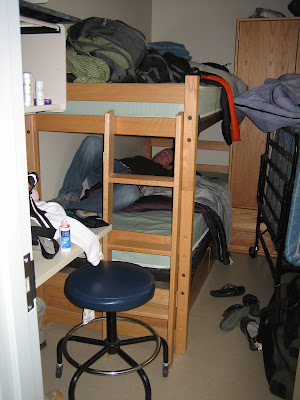
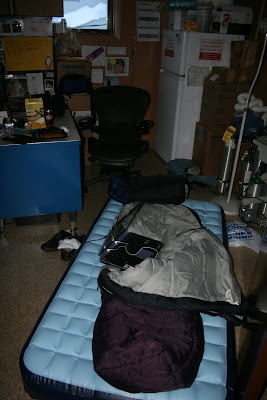
At least we had some happenin’ digs to sleep in.
As we were working hard late one night (probably 9 pm) a health aide accompanied a woman who was in obvious distress into the clinic. I knew immediately what was happening as I saw the health aide carrying two bags full of a bloody liquid.
The woman was having a miscarriage. Soon after they health aide and the woman arrived the physicians assistant who lives in St. Michaels arrived.
The health aides are amazing people. Lay people but trained very well. They can and do almost anything health related. From well baby exams to emergency care.
When they call in the PA trouble is brewing.
It was very difficult to be in the clinic that night. Swell and I had finished our – what often seems meaningless - work and were watching Heroes on the computer. Every now and again we would hear some sobbing coming from the clinic room down the hall.
At one point long after we had gone to bed we were both awakened by wailing. We both felt so bad but there was nothing we could do.
When morning rolled around the clinic was empty and it was back to work. As we worked we knew out there in this small village was a woman hurting. But as this thought crossed our minds we also realized that out there in this village there were many, many people hurting.
Alcoholism .
Suicide.
Neglect.
Abuse.
Problems around the world but more prevalent in some areas than others.
We hope that the underlying truth that people are hurting everywhere be it from a social disease, inequality, health crisis, injustice, spiritual battle, or some other cause will direct our future.
As we try to determine our future a passage that Shane wrote is of particular interest:
“As we consider economics, some of us will give people fish. Others will teach people to fish. But still others must be looking at who owns the pond and who polluted it, for these are also essential questions for our survival. We must storm the fence that has been built around the pond and make sure everyone can get to it, for there are enough fish for all of us.” Page 151
I had always hoped to be one who “teaches people to fish” but as an optometrist the opportunity to teach in a global context is rather limited. I’m guessing Swell and I will be relegated to the “giving of fish” and the important task of questioning our politicians and leaders as to why injustice exists in the world. The whole idea of living in suburbia and owning a practice scares us. It scares us because we don’t want to become those people. We don’t want to have a kid and say: my goodness our 950 sq foot home is no longer big enough. Bring on the 4000 square foot homes! (Have you ever watched HGTV? Those people are nuts. Three people family? You NEED a five bedroom house!)
Shane is able to verbalize concerns I’ve had for years much better than I can:
“Layers of insulation separate the rich and the poor from truly encountering one another. There are the obvious layers like picket fences and SUVs, and there are the more subtle ones like charity, Tithes, tax-exempt donations, and short-term mission[s]…, while they accomplish some good, can also function as outlets that allow us to appease our consciences and still remain a safe distance from the poor.”Page 157
How true this often is. The poor become an idea rather than people. Yes we recognize that poverty exists in this world but we do our part by giving to our church, by flying to Mexico once every couple of years to build a house. We go to the local soup kitchens annual fundraiser but we never meet the poor. We never interact with them. We never question why they are poor.
“As we consider what it means to be ‘born again,’ as the evangelical jargon goes, we must ask what it means to be born again into a family in which our sisters and brothers are starving to death. Then we begin to see why rebirth and redistribution are inextricably bound up in one another, as a growing number of evangelicals have come to proclaim. It also becomes scandalous for the church to spend money on windows and buildings when some family members don’t even have water.” Page 163
How do we redistribute? Ingrained in me as a Christian is the idea of being a steward of my money but I consistently hear from Christian leaders the idea of building wealth so that we can give more. Swell and I did our best to attend a Dave Ramsey study at our church (who are now disappointingly undertaking a multimillion dollar building campaign). Dave Ramsey is a Christian but the gist of his message is to live like no one else so that you can live like no one else. Translation? Spend less (GOOD!), so that you don’t go in debt (GOOD), so that you can save more (OK?), so that you can build wealth through investments (OK?), and then you can live like a king once your money starts making money. If you do it just perfectly you’ll be wealthy AND you’ll leave a legacy for your kids.
I don’t want to leave a legacy for my (completely fictional) kids. There is so much need in the world now. What good is my money doing in investments and savings when like Shane writes “our sisters and brothers are starving to death”?
(For those who have read things I’ve written over the years its like he stole the words out of my head, eh?)
“One of the fathers of the church, Basil the Great, writing in the fourth century, put it this way: “When someone strips a man of his clothes, we call him a thief. And one who might clothe the naked and does not – should not he be given the same name? The bread in your cupboard belongs to the hungry; the coat in your wardrobe belongs to the naked; the shoes you let rot belong to the barefoot; the money in your vaults belongs to the destitute.’” Page 165
Ouch.
So what do we do? Do we move to the suburbs? Open a practice? Make money? Give money away?
Or do we move to the inner city? Open a practice? Make less money? Give everything away?
Or do we end up in Asia or Africa living with the world’s poor. Making nothing but truly living?
Or do we end up traveling more. Seeing what plagues this world.
Alcohol.
Drugs.
Sex.
Poverty.
Inequality.
Injustice.
And while we see these things can we bring ourselves to make a difference.
How do we make a difference?
It’s the end of another year (Our years begin and end on May 25th) and we are probably further away from answering these questions than we were 6 years ago but now we need to come up with an answer. Our house is for sale (its been shown once!), we have no jobs when we come back from our Eastern European tour of poverty and by now we’re probably unemployable in Atlanta (that’s what happens when you keep quitting jobs).
So we continue to struggle with life and the meaning of our lives. We continue to struggle with the choices we’ve made and are making. We continue to move about directionless hoping to stumble upon our life’s calling.
Where will this year take us?
Well this time last year we were just leaving Palestine. This year we’re in Nome. So who knows but we are going to try to have a different year this year. A year that accomplishes something.
Stay tuned for that.
I guess.
Eventually our time in St. Mikes and Stebbins was up.
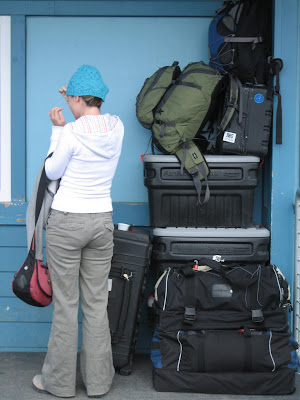
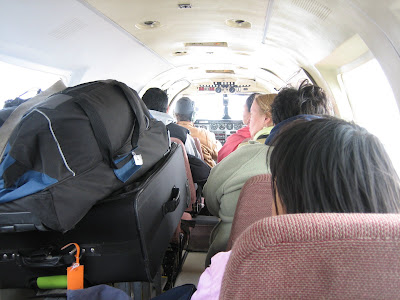
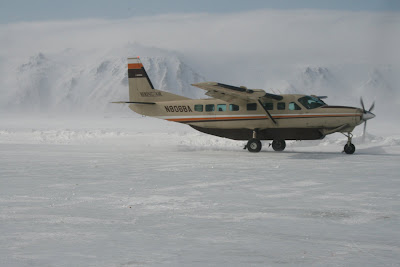
We hopped on the plane for our flight back to Nome.
Exhausted.
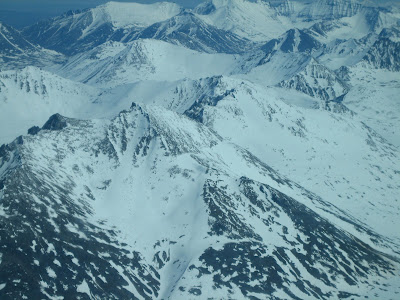
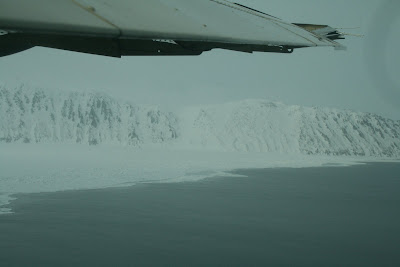
But on the way home we flew over a bunch of Walrus. The pilot was kind enough to break from his flight pattern circle around and descend so that we could get a good look at them.
It.
Was.
Awesome.
Although the pictures didn't turn out you could see hundreds of Walrus just sitting around.
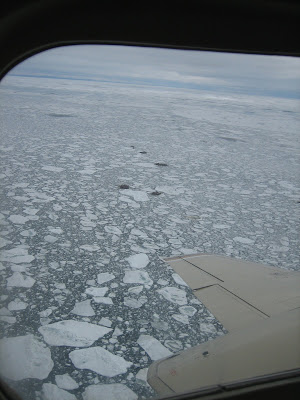
A neat way to end the week.
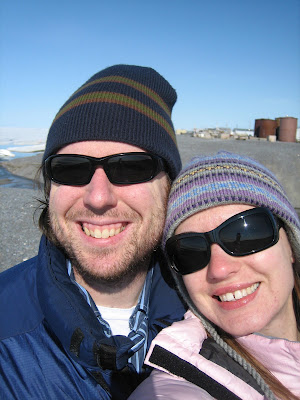
We ended up at home. Sick as dogs and spent the next two days sleeping.
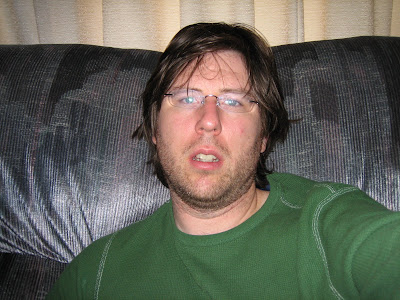
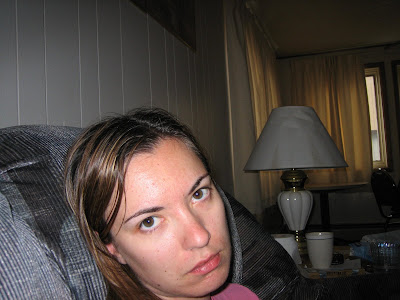
And looking miserable.



 Posts
Posts

